
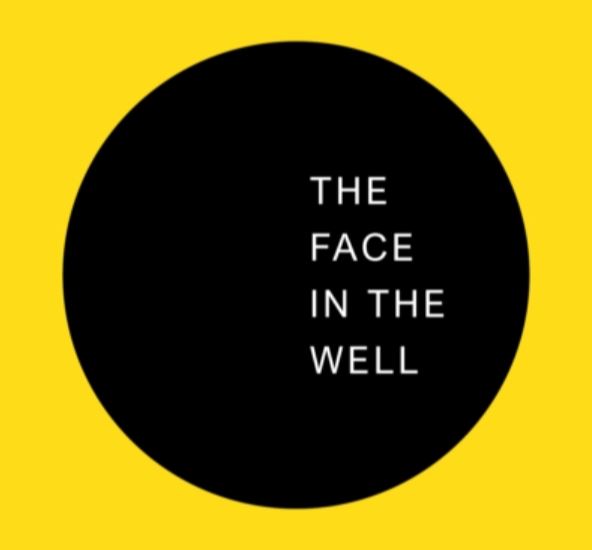
All the precision, wit, and quiet profundity that readers of Rebecca Watt’s previous two collections, The Met Office Advises Caution and Red Gloves have come to expect are again on display in her third, The Face in the Well (all Carcanet); but her poetry has – I am looking for a way to avoid saying matured here – shrunk. And by shrunk, of course, I mean grown. It has grown in subtlety of rhythm, in nuance of rhyme, in lucidity and succinctness of metaphor, it has grown in precision, wit and in both profundity and the quietness of that profundity. And for all these reasons, it has shrunk. It is not that the poems are shorter – some are, three of the four ‘Soundings’ poems, observations out of childhood which dot the first half of the collection, are a crisp four lines long – but while Watts has always been an economic poet, she has now also found a way of condensing the essence of each poem into a small pool of complete clarity.
Some of the poems here seem to channel the spirit of haiku or tanka, in that they are about far more than the small number of words employed appear to be about. Take this example, ‘Buttermere’, quoted here in its entirety, which the reader can peer into as easily as the speaker seems to be peering out, and from which the poet vanishes almost entirely, leaving a sense of what feels like loneliness and despair, but taking a turn – at the stanza break – into the realisation that a decision has been made, either further into despair or breaking out of it. The clarity of the poem is in the notion behind the decision, that whether it is towards or away from despair is immaterial, the key is that stasis has been replaced by action: something is going to happen.
All day I have sat on the lakebed
looking up at the undersides of clouds.
Here and not here.
The lake says there’s nothing
to lose anymore.
The water is extremely clear.
The deep ambiguity of ‘nothing to lose anymore’ aligned with the definiteness of ‘extremely clear’ in the second stanza creates a tension which opens up the metaphorical possibilities of the first. The poem becomes dizzyingly broad in its scope but totally sharp and well-defined at the same time, it is as though Watts provides the reader with the essentials and trusts them to do the rest for themselves.
As I say, wit is nothing new to Watts – I was tempted to call this review What’s With the Wit of Watts and then thought better of it – but her humour now manifests both more openly (as in the acutely psychologically observed ‘Woman Seeks’) which is a very welcome development in a cultural landscape which sometimes seems to have been entirely drained of humour, and more subtly (as in her juxtaposition of a poem called ‘I want to be the orange’ with one of the facing page called ‘Concentrate’, so that the reader is faced on opening that page with the proposition ‘I want to be the orange concentrate’, which adds an ironic sense of artificiality but also a hit of high-intensity sweetness to the “golden afterglow” in the first poem). It’s also just funny because it’s funny.
Also taken to new and very pleasurable heights is Watts’s seemingly irresistible urge to quietly goad and prod those who may be her natural detractors. ‘At home with Emily Brontë’ begins
Ironing is her favourite task.
The rhythm and the steam
transport her to an outer state
more vivid than a dream –
before going on the depict doing the ironing as a veritable act of liberation (“Each stroke a stride, the rugged earth / dissolves into a plain… // …and, godlike, when she’s done with it / she folds the world away”). Such reinvention of a stale and cliched symbol of female domestic subjugation is both powerful in itself and likely to irritate a certain kind of feminist. I sense that this would qualify as a double-whammy for Watts.
She also continues along a rich seam of long-arc irony which she has mined previously, where she outright contradicts what she says in one poem in a poem later in the collection. In ‘Baroque’ she longs for an amusingly over-the-top funeral, whose excesses will stand in contrast to the “practical” life she has lived (and what that word means is really what is explored in the poem, it seems to me):
Let six black-plumed stallions draw the black-gloss carriage
wherein my black-gloss casket rests upon a maple plinth
festooned with lilies…
But then twelve pages later, in ‘Heptonstall’ she considers the resting place of Sylvia Plath, (perhaps replying to those who have called in the past for Plath to be recognised in a grander manner more like that of Ted Hughes who has a memorial at Westminster Abbey although his ashes are scattered in Dartmoor) and here she states
I favour the flesh
of the lily, the rose,
which picks apart quickly
and rots and is gone.
No legacy message,
no guardian stone…
…No pilgrimage site,
no date and no name:
just an honest hillside
at the edge of a moor
where no one comes knocking
on nobody’s door
Is this Plath’s voice? Hughes’s? The poet’s own? Perhaps any and all. Either way the simple sentiment here is in direct opposition to the flamboyance of that in the earlier poem, and even the image of the lily is taken and re-manipulated to contrary effect. In Watts we must live with contradiction, in fact we must embrace and enjoy it. This aspect of Watts brings to my mind Philip Gross, a very different poet but one who sees equally clearly that poetry does not require the world to be made up of logical, left-brain consistency; in fact, it flourishes without that requirement. This is from ‘Severn Song’ the final poem of Gross’s TS Eliot Prize-winning ‘The Water Table’ (2009):
The Severn was brown and the Severn was blue –
not this-then-that, not either-or,
no mixture. Two things can be true.
The hills were clouds and the mist was a shore.
Actually, I quote Gross here for a further similarity with Watts. That they both seem to me to enter into nature rather than attempt to observe it. In Gross, language evokes the life in nature so that the mind of the reader almost becomes it without looking. Watts also sometimes heads in this direction – in ‘What the Mouse Said’ she creates a mouse-voice in a way that recalls, though less eccentrically, Wallace Stevens’s ‘Bantams in Pine-woods’. ‘Buttermere’ I have already mentioned. And in ‘Joining the Spiders’ she wants to shrink into the world of the creatures she finds in a “crevice in the old park wall” when she is caught in rain.
…I wonder
if I stay here long enough
might they take me in –
reduce me
to a crescent of a fingernail
And in the opening poem, ‘Private No Access’, “The animal in me is padding through woods in the rain, / poking her nose in rabbit holes” – again carrying on the theme of animal-becoming from previous collections. Here we sense the livingness of the natural world, and the freedom where human barriers are rendered meaningless – a region the poet of all artists should be licensed to “root(..) out spiders and insects” whether it is to eat them or become them: a world “where every thing alive is permitted // and everything is alive.”
The shrinking into nature – be it a spider or a mouse – is all of a piece with another theme of this collection, alluded to earlier: childhood, returning to it, almost tumbling, Alice-like, back into it. Another poem that yields multiple meanings because it refuses to specify, is ‘The Miniaturist’, which like ‘Buttermere’ trusts the reader to interpret as they wish. A little girl called Esme draws a picture of a house (“the pencil barely touches the paper” – what are we to make of this? What does it tell us of Esme, her character, her past?).
None of the houses she has lived in
looked anything like this,
and still it’s home –
where she must shrink right down
until she’s only a speck,
invisible in the corner of the glass.
Watts suggests an entire childhood here. How many houses has she lived in? Why must she shrink and become invisible? Is this a story of shyness, bullying, foster care, abuse? Or is Esme just a quiet girl who, like Watts herself perhaps, wants to disappear from the human world and enter into a more-real – corporeal – world of nature, as symbolised by a spider who may or may not be sitting “invisible in the corner of the glass”.
Like any wise poet, Watts knows that unanswered questions are far more important that answered ones.
Other poems, like ‘When my Sister’ (which ironically – and not ironically – turns an unexpected can of Lilt into “the work of an angel”) are clearly based on Watts’s own childhood; others may (or may not) be, as in the eponymous ‘The Face in the Well’, where the young speaker sees their own face reflected in the dark water of an out-of-bounds well, and she
…recognised a face, like mine but changed –
rounder, like the moon, neither young not old,
just hanging brightly in the soft black sky
which stretched into the soundless universe.
(the quietness and silence in Watts is perhaps another similarity with Philip Gross).
Here the poet’s – I think it’s the poet’s – external Self meets her internal Self face-to-face. It is a profound moment in both her growth as an individual and as a poet. This is an expression of a self-confidence which understands that expressing every perceived truth (virtue-signalling) is not necessary for an assured sense of who one is – we only need to be able to see our own reflections to live with ourselves:
Loneliness and fear and all the shame
that dutifully feeds them flowed away.
I didn’t have to hear my voice thrown back
to understand the face was always there,
at home deep down, connected to the source,
needing a reflection to make it live.
The key unanswered, important, question here is: what is meant by ‘source’?
Watts’s formal skill is important (see Glyn Maxwell’s glowing review here), but equally important for me is that she is saying something worth saying, that I emerge from her work having learned something, having been given a new trail to follow. And this poem – the collection as a whole in fact – is evidence that Watts is now truly amongst the most interesting poets out there.
You can buy The Face in the Well from Carcanet, here.
 Wood Bee Poet
One thought on “Shrinking and Growing: Rebecca Watts – The Face in the Well”