


If you can, please visit and support the National Holocaust Centre and Museum.

Dear Dave
You don’t know me as far as I’m aware, although it’s possible you’ve read my poetry review blog. I was going to post this in your comments section, but it’s become quite long* so I’ve decided to make an ‘open-letter’ of it here on my own site, I hope that’s not inappropriate, it feels like the ‘literary’ thing to do anyway.
(*No, I’m being specious, I wanted plenty of people to read it because I think it’s important, and I was worried that it would get hidden away and lost in your comments.)
I’m a genuine admirer of your reviews and essays, which are often both entertaining and instructive, and your website is an important resource. Also, your championing of under-represented groups in contemporary poetry (and impatience with hegemonic elites) was inspiring to me when I made the decision to review more actively.
However, your essay on Toby Martinez de las Rivas concerns me, and this is why:
1) In reading Black Sun, Terror, Martinez de las Rivas’s writing in PN Review and his interviews online (along with Jack Belloli’s wonderful Black Sun review) the individual I find is a religious conservative with a startlingly powerful vision of the authority of God, a highly sensitized relationship with nature (and the linguistic skill to evoke that relationship for the reader) along with an unfashionable belief in objective truth and the determination to look for that truth at all costs. I also find a political Conservative who would increase rather than decrease central power as an organizing principle, who plays with the mediaeval concept of Body Politic and very possibly even has time for the notion of the Divine Right of Kings (this last is a little speculative but it seems to follow from what he has written). I find a poet utterly at odds with a great deal of the poetry written in Britain today and who associates this with a metropolitan ‘centre’ of which he is quite disdainful on that basis; but also one who lives in the arid south of Spain and finds himself longing for, and therefore making symbolic use of, the green fields and Anglo-Christian architecture – and the snow – of England (this is not in itself a yearning for a mythical bygone world: England is objectively greener than Spain, and Spain’s architecture is clearly more…Spanish). He is a poet looking for meaning where he feels there ultimately is none (truth with no meaning), one who misses his ex-wife, who would like his children to grow up in the England of his childhood (again, the conservative) but feels social media technology (and the tide of, as he sees it, left-wing influence in the cultural sphere) is taking that England away. The overall impression I am left with is of an eccentrically intellectual man on his knees looking up into a dream-sky of birds and a blinding (prophetic?) eclipse – black layered over white (and I see no suggestion of race intended here, more the suggestion of opposition and – mental – conflict as opposed to the harmony of a ying yang approach to duality). All of this is enough to make you loathe and detest his poetry (and possibly my reading of it) – it actually makes it all the more fascinating for me, partly because I find much of it so hard to relate to – but it emphatically does not make him a fascist.
2) The term ‘fascist’ does not serve you well in this context for a number of reasons: a) although it feels like you are calling a spade a spade, it is actually a blanket word which you pull from Mussolini’s text to cover everything Martinez de las Rivas writes and says, obscuring both the intricacies of his poetic experimentation and the theoretical/critical challenges and problems his work presents; b) it’s an emotive word, used to elicit a quick, strong reaction one way or another rather than a considered response; c) it mistakes Martinez de las Rivas’s use of some of the tropes of fascism and totalitarianism in general (and Fabers’ – i.e. the Nazi-like red, white and black of the Black Sun cover) for the thing itself – in fact I almost get the impression that you have fallen into a trap that was set for you…can poet and publisher really not have seen this coming? I wonder how many people have bought and will buy his book on the back of your essay.
3) That Martinez de las Rivas’s poetry is so utterly different from anything else on the Forward shortlist surely makes his presence a welcome sign of the Prize’s diversity.
4) When you say “we all know who lives in cities” you are making a speculative leap (okay, I speculated above too, and should probably also be condemned for it) of the type that overlays what Martinez de las Rivas actually says with your own agenda. You are suggesting his dislike of metropolitan poets and cliques can be extended to assume a dislike of the multicultural nature of cities like London; this is evidence of a penchant for racial purity, and his symbolic use of light and dark can easily be added. But all of this can be read in a different way as I indicated in (1): those looking for fascists will find one, perhaps; but those looking for a poet engaged in an honest and personal dissection of his own sense of place and faith in a baffling world are more likely to find such a man.
5) None of this is to say that Martinez de las Rivas is not a fascist. He may be. I don’t know him and if his next collection turns out to be a genuine attempt to further fascist thought amongst the poetry-reading classes I will openly and loudly eat my entire argument and apologize to you personally. But I would still say that, at this point, there is not evidence to support your allegation.
6) Your timing is also problematic. Posting your essay before the Forward Prize is revealed sends a clear message to the judges that should Martinez de las Rivas win, there will be trouble – from you and from others on Twitter who take an interest. To have an influencing voice appears to have been your motive in posting, and you more or less say as much in your essay (“I write this in haste because Martinez de las Rivas is a tendentious and damaging thinker, his presence on the shortlist is diametrically opposed to the Foundation’s principles, and I fear what he might do with the international platform a victory would provide”). This is not fair on anyone involved. I have seen your comments and opinions on prize shortlists before, but I have not been aware of your actively trying to influence the outcome of a competition. This seems like a very dangerous line to be crossing for a reviewer who has the industry’s ear. The right time to post would have been after the (diverse and capable) judging panel had made their decision, and we were able to see for ourselves which poet had won the money and platform. Your choice of timing smacks of ‘silencing’ those with opposing views. This is itself a feature of tyranny, as you know.
*
You are quite right to be vigilant when it comes to inequality, privilege and tyranny, and you are probably right to look for the beginnings of totalitarianism in the cultural margins – where poetry still lies for all its popularity (certainly the less obvious and more challenging poetry) because, as Ellen Hinsey says in The Illegal Age, “The Inconceivable first emerges along the periphery”, but if we create a climate where artists are afraid to express alternative and difficult viewpoints because doing so will lead to loud and angry denunciations – to their smothering with blanket-language – if we close down poetry as a place where the unsayable (any unsayable) can be at least investigated, then tyranny is one step closer. imho.
I hope this open-letter does not lead to us being ‘Reviewer Enemies’, although I don’t suppose it’s the best way for me to introduce myself. Perhaps we could both be accused of whitemanspreading over the issue, but I wrote to you, partly at least, because I think open dialogue between interested and engaged people is a sign of a healthy poetry culture. I hope you agree.
My admiration for you as a reviewer remains, but I think you made an error in ‘calling-out’ Toby Martinez de las Rivas, especially when you did.
Best wishes
Chris
The second Jack Belloli blog post referred to in the comments below is here.

NB – This is my own tribute to the work of Eavan Boland. I am not a Boland scholar and so what follows is unlikely to contain anything particularly new for those who are already well-read in criticism and analysis of her poetry. If you’re interested in a personal view of her work as a whole, however, you might find it interesting. Only one way to find out…
For two years I carried the New Collected Poems of Eavan Boland (Carcanet, 2005) around in the glove compartment of my car, taking it out to stave off boredom in traffic jams, car parks, laybys and verges during the daily routine of commuting and ferrying my daughter to and from various evening clubs and activities. During this time, I have taken what I call my ‘Proust Approach’ to the collection, knowing from the beginning that I wasn’t going to rush it, picking it up only when it felt right – and not dangerous traffic-wise – and being happy to read other things in the hiatuses between pages (if you’re interested, I’m currently ten years into my actual Proust Project and only now getting round to The Prisoner). This slow approach has allowed me to see Eavan (it’s a little impertinent to use her first name, I know, but I have travelled with her voice for so long I feel like I know her) as a poetic trajectory rather than a point in time; but it is a trajectory which feels to me like an end in itself, not a development or progression towards some final point of accomplishment. Finally, this week, with the lovely, quiet elegy to Michael Hartnett and perhaps to an older, more natural, musical mode of poetry, ‘Irish Poetry’, I finally bade Eavan farewell. And now, I can look back over her oeuvre (minus Domestic Violence, which came along in 2007) the way a young musician might look through the sheet music of a Mozart symphony, admiring the peaks and troughs, the waves and contours, the shifting forms and patterns. I’m not so young, but such is the way I see my relationship with this dazzling body of work. Eavan has spoken to me through these two years with a quiet, dignified authority I have seldom heard; and at times with such force: a calm, clear anger which she has needed to explain to one like me who does not understand. But she has explained, and I think I have understood. This is how I have come to read her poems, a master explaining an Art to a novice.
To continue the teacher-student metaphor, she began, in her early work, explaining the rules of rhyme and scansion – wonderful, tightly-formed poems like ‘Cyclist with Cut Branches’: “Jasmine and the hyacinth, / The lintel mortar and the plinth / Of spring across his bars, / Like globed grapes at first I thought, / then at last more surely wrought / Like winter’s single stars.”. Then there were her little gems of metaphysics like ‘The Poets’, as well as her great tower of finely-rhymed myth-narrative ‘The Winning of Etain’, both from 1967’s New Territory. Both of these felt like examples of how mastery of form comes before deviation, experimentation and, possibly, freedom. Much later, in In A Time of Violence, I would see how she came to subvert figures of Irish mythology in poems like ‘Story’ where she appears to be ‘saving’ female characters from mythological narratives where they have become almost ‘frozen’ by the epic language of the past: “I am writing/a woman out of legend” she says; and then one poem later, in ‘Time and Violence’ taking on the voices of constellations, mythical women trapped in the sky: “This is what language did to us…” and then a plea “Write us out of the poem. Make us human / in cadences of change and mortal pain / and words we can grow old and die in”. Both these poems continue the focus on Suburbia for which Eavan became renown I think and which began way back in the early seventies with The War Horse, the penultimate and antepenultimate poems of which are ‘Suburban Woman’ and ‘Ode to Suburbia’. ‘Suburban Woman’ builds an unconventional portrait of a woman at home from the language of war and sex, and ‘Ode to Suburbia’ juxtaposes a late suburban evening with the imagery of Cinderella, finally metamorphosing the ‘housewife’ not into a princess but first into “The same lion who tore strips / Once off zebras” and then back into a sleeping cat which “may / On a red letter day / Catch a mouse.” The ‘suburban woman’ (a woman of the mid-to-late twentieth century, and an Irish woman, no doubt), her routines and skills and thoughts and creations remains standing (so often standing) in her house, and at the doorway to her house (in the famous image from ‘Anna Liffey’), throughout this collection that she starts to seem like a temple statue of Athena, or perhaps more appropriately, Hestia. She is usually placed inside the home (with all its connotations of being trapped), but her thoughts are more often aimed out – they fly skywards and look down at the hills, rivers and cities – and Irish history/past, as I shall come to. The soul of this particular emblem-woman is projected outwards in advance of a looked-for metamorphosis. It’s this idea of metamorphosis, or perhaps the unrealised potential for it, that appears briefly in The War Horse but returns more emphatically and with an edge of (perhaps exhausted) exasperation in In Her Own Image* and Night Feed (both 1980). Here there is a sense that the statue-woman evoked in earlier collections is now breastfeeding late at night, even as the poet herself is doing so, and so the emblematic figure is becoming intertwined with a ‘real’ woman – the stone of the statue is softening into flesh. But now, with a sudden and visually impactful use of of short-lined poems (thin, drawn perhaps, emaciated from lack of sleep?), and notably those whose titles begin ‘A Woman…’ she introduces a full-on body-change, self-willed and unexpected. Boland (it’s no use, I must use her surname) rejects the homely softness of human flesh – the rosy flesh of the compliant cook in the kitchen, being the flipside of the desirable flesh of the bedroom whore – for more complex shapes and coverings: the fish scales of a sexless aquatic creature in ‘The Woman Turns Herself into a Fish’, the fur of an omega wolf in ‘The Woman in a Fur Shop’, and the festering, stinking bandages of a sense-stripped corpse in the surreal ‘The Woman as Mummy’s Head’. None of these forms are easy to translate, and none of them provide quick answers to questions about identity and gender. They ask rather than answer such questions, and they bring to mind something Boland said of her own work: “The poem is a place – at least for me – where all kinds of certainties stop. All sorts of beliefs, convictions, certainties get left on that threshold. I couldn’t be a feminist poet. Simply because the poem is a place of experience and not a place of convictions…” (quoted in PN Review 220). It is not that the poet rejects this metamorphosed woman, or the un-characteristic note of anger that pervades ‘It’s a Woman’s World’ (“And still no page/scores the low music/of our outrage”) and her various ‘Tirades’ for the Muses, such as ‘Tirade for the Epic Muse’ (“Piston-fisted, engine-headed, blade-faced hag!”), in fact she returns to both in 1987’s The Journey, along with the suburban theme**, but having asked those questions, Boland goes on to ask others: questions of family, belonging, and the blurred line between history and the past. There are surges of close observation in her writing too; moments when she seems driven to look more fixedly at objects – this is most overtly done in the ‘Object Lessons’ sequence from Outside History (1990) with poems such as the sad and beautiful ‘Bright-Cut Irish Silver’ (“this gift for wounding an artery of rock”) – but this is by no means the only time she pauses over the physicality of an item (often of family or historical value or interest) and mines it for significance – and taking a long view, these moments of tight focus feel almost like lyrical contractions which work in opposition to the dilations of other poems that stretch the reader’s view out over a summer, a city, or a situation. This, it seems to me now looking back over New Collected Poems, gives her work viewed over time a sort of rhythm not unlike the in-out of breathing or the up-down of waves. The poems together, as I think is often the case, are more than the sum of their parts, they take on a ‘super-organism’-like life which is independent from the life of each individual poem. The natural place (I suppose with hindsight I can see this) for the developing image of a silent, standing, internal/eternal female figure, and an awareness of the constant and heavy weight of epic myth-narrative to be heading is towards an increasingly distinct dividing line (a threshold) between notions of ‘the past’ and ‘history’. This distinction is present throughout Boland’s work – even in The War Horse, with poems like ‘Child of Our Time’ and ‘The Famine Road’, the one evoking a more personal past (“Yesterday I knew no lullaby”) and the other a colder, more political one (“The Relief / Committee deliberated…”). It is of course, part of the power of ‘Child of Our Time’ that it represents the devastating meeting of the political and the personal. But by the final collection of the New Collected, Code (2001), the relationship between the two has become more complex, more central and more overt. In ‘How We Made a New Art on Old Ground’ there are two different histories, one has a ‘voice’ of sorts: “follow this // silence to its edge and you will hear / the history of air: the crispness of a fern / or the upward cut and turn around of / a fieldfare or thrush written on it.” – this is the personal past of earlier collections. And the other history “is silent: the estuary / is over there. The issue was decided here: / Two kings prepared to give no quarter. / Then one king and one dead tradition.” This language of a personal past – a livingness of the past as opposed to the deadness of history – is tied back to the Irish oral poetic tradition in that lovely final elegy of the collection, where Eavan (my travel buddy, my friend-in-voice, and my esteemed poetry tutor who has guided me on a two-year-long course) remembers an evening with her friend Michael Hartnett when he spoke about “How the sound / of a bird’s wing in a lost language sounded.” And though there is sadness in the death of her friend and in the loss of a poetic tradition, the very poem itself stands for the livingness of the past. A past with a voice we can listen to. “As if to music, as if to peace”.
Although I’ve said goodbye to Eavan as a travel buddy, I cannot quite bring myself to put her back on the shelf. The New Collected Poems, now part of my life, will sit on the table at my bedside (next to Proust) and I will continue my long journey with her. It’s a journey I do not expect to end; and that’s okay with me.
Eavan Boland’s New Collected Poems is available from Carcanet, here.
*I don’t mention it in the body of the text as it would clutter things up, but In Her Own Image contains a moment at the very end which seems to me quite pivotal when it comes to reading Eavan Boland’s approach to mythology and women’s self-reclamation. The final four stanzas of the final poem:
it’s a trick.
Myths
are made by men.
The truth of this
wave-raiding
sea-heaving
made-up
tale
of a face
from the source
of the morning
is my own:
Mine are the rouge pots,
the hot pinks
the fledged
and edgy mix
of light and water
out of which
I dawn.
(Making Up)
**it is interesting that the themes of metamorphosis, anger and suburbia (all present in separate poems in The Journey – in ‘The Woman Takes Revenge on the Moon’, ‘Tirade for the Lyric Muse’ for example – but they also at times appear to mutate and combine themselves, diluting into a new tone and style where the woman and her bourgeois surroundings, the epic and the lyric, the real and the imagined become fused as a single, startling voice, the anger distilled into a sense of loss and regret:
Setting out for a neighbour’s house
in a denim skirt,
a blouse blended in
by the last light,
I am definite
to start with
but the light is lessening,
the hedge losing its detail,
the path its edge.
Look at me says the tree.
I was a woman once like you,
full-skirted, human.
(Suburban Woman: A Detail – III)

As the back-cover blurb tells us, Did You Put The Weasels Out? (Eyewear) by Niall Bourke is inspired in part by an eighth-century Irish epic (The Tain) and in part by a nineteenth-century Russian romantic verse novel (Eugene Onegin); but it also contains roughly equal measures of James Joyce, Flann O’Brien and Spike Milligan. What results from this mix of influences is something rather more than the sum of its parts, and it would be a mistake to write it off as a piece of showy experimentation: this is not romanticism, not modernism, not surrealism or absurdism – not just, anyway – it’s also a contemplation of the modern condition: western spiritual malaise, economic disparity, loss of identity. But like any such contemplation worth its salt, it does not take itself too seriously.
The text invites you to draw comparisons between the silly/funny/mundane story of Mark Setanta’s imagined row with his fiancée Jen, his sloping off from work early to spend the afternoon walking and drinking, and his return home later that night, with the The Tain episode of the Ulster Cycle of myths in which uber-hero Cú Chulainn defends Ulster against Medb and Ailill’s cattle-raiding forces of Connacht. It’s therefore tempting to try and read Did You Put The Weasels Out? in the same way you might approach Ulysses, trying to find mythic equivalence in every character, episode and action; and it is true that both Mark and Jen at different times might be read as Cú Chulainns (Setanta is the Irish hero’s childhood name) and other characters may or may not have their direct equivalents (Mike/Medb? Isy/the Morrigan? Masefield/Fer Diad?) but in general we look in vain for heroic parallels in this tale of modern paranoia (all Mark’s worries are in his mind) and alienation (Mark is an ‘exiled’ Irishman in London) – and this is part of the whole “perverse” point, I think.
Like Flann O’Brien, Bourke makes extensive and eccentric use of footnotes throughout – often the footnotes themselves have footnotes – and he impressively/doggedly sticks to rhyming through most of these (as well as in the contents and acknowledgements!). There is no denying that (as in O’Brien) this interrupts the flow of the narrative to begin with, but as you proceed you become attuned to the style and it adds layers of richness and depth to the poems rather than detracting from them. Bourke takes layering to a whole different level in two poems which are given lives of their own by thinking/speaking verse in cartoon bubbles (again bringing O’Brien to mind in At Swim-Two-Birds where internal characters are given unexpected life in relation to their author, but here it is the Pushkin sonnets themselves which appear to be coming to life, as post-modern an idea as anything I’ve ever read).
Just as Irish mythology gives great significance to the relationship between event and landscape (“landscape as a mnemonic map” as Ciaran Carson calls it in the introduction to his translation of The Tain), Mark (as much a Leopold Bloom as a Cú Chulainn) walks through and observes different parts of London, and while doing so he imbues them with similar significance: the shapes of the City skyscrapers viewed from Hampstead Heath inspire the radical shape of the ‘graph-poem’ (my term for what is as far as I know unique in its form) called ‘Economic Development’, a briefly digressing mini-critique of laissez-faire capitalism; and the winding River Thames itself becomes a metaphor for tamed and emasculated modern life (in ‘River Retirement Blues’).
Mark Setanta’s story is free from the insane violence of the Ulster Cycle until the very end (in the last of the three ‘remscéala’ named after The Tain’s prologues but which Bourke, in typically contrary style, uses as appendices) when Cú Chulainn’s famous ‘battle frenzy’ or ‘warp-spasm’ is replicated by Mark losing his temper hilariously with the ‘serve-yourself’ scanning machine at his local supermarket (I will now never be able to hear these machines say “unexpected item in the bagging area” without smiling!) and subsequently being beaten to death by his fellow shoppers. This episode, like the other ‘remscéala’ are to be read, like a couple of other incidents in the story I think, as things which didn’t happen but could have in another, more directly analogical world perhaps.
Quite apart from the mythological allusions, the Milliganesque absurdity and fun with language (e.g. sausages/assuages) and the use of the Onegin Stanza to carry the narrative on at a good clip (footnotes notwithstanding) both add to the reader’s enjoyment and suggest further layers of meaning (there is possibly something Onegin-like in Mark’s self-absorption and his misinterpretation of Jen’s door-slamming for example, but perhaps we could go too far with this line of thought?).
There are also moving individual poems in here which stand up well on their own, outside of the main sonnet-flow, and which serve to turn Mark into a more fully-rounded character than he would otherwise have been (‘My Father The Forest’ and ‘My Love Is The Weeds’ are my favourite of these) and which also contribute, I would suggest, to the feeling in general that there is some equivalence intended not only between Mark and various fictional characters but also with the poet himself.
As to what the Weasels of the title signify – they appear (along with various types of hats) several times throughout the novel, mentioned by different characters in different situations – they appear to be symbolic of playfulness, memory, gnawing fears, paranoias, and imagination itself (and possibly all – or none! – of these). I can’t pretend that I know what they are intended to signify ultimately, but it is perfectly possible that they have some mythological significance I’m unaware of or that they are intended simply to mean whatever I want them to mean. The biggest compliment I can pay this book is that it makes me want to go back in and look for more. Perhaps on a subsequent reading I will finally be able to tie the weasels down to my satisfaction.
It seems easy to dismiss allusive and formally structured (though experimental) poetry as elitist or ‘show-offy’, but I would offer this intriguing, beguiling book as evidence against that charge. I hadn’t read either The Tain or Eugene Onegin before beginning Did You Put The Weasels Out? but it soon became clear that I would get more out of it if I did. So I picked up the e-books very easily and quickly, read them, enjoyed them and then read and enjoyed this book. We should thank poetry for introducing us to more poetry, I think. But more than that, this “Perverse Novel in Verse” made me want to go off and try writing some Pushkin sonnets and some ‘graph-poetry’ (if that’s what we’re going to call it!) not because I thought I could do a better job than Niall Bourke (I tried, I can’t), but because he clearly had such a good time doing it!
Did You Put The Weasels Out? is published by Eyewear and can be bought here.

The rose in my garden is in a state,
I think it’s dying.
It’s partly my fault, I guess, and partly
the plant’s position
in the wall’s shadow just behind the gate.
It looks like a rose with malnutrition,
spindly and wilting.
Some of the flowers have turned sort of black.
Green, pink and white-ish
aphids, an axis or a coalition,
subject the rose to constant attack;
and it’s giving up –
even though I’ve tried to help it survive
with water and spray,
the rose’s resolve is starting to crack.
But I was out there in the rain today
thinking my dark thoughts,
when I noticed a new unfurling bud
poking its head through
a gnarled peduncle, smiling, in its way;
and I watched it closely. Though I could see
insects and disease
ranged around its fragile, virgin petals,
sucking the life out
of the older flowers, it seemed to me
this bud had been given a moment’s grace.
It wasn’t sickly.
Its skin was entirely without blemish.
It had the calm glow,
beneath the gloom, of a sleeping child’s face.
But I know what my neighbour gardeners’ll say
about my sick rose.
‘Pull her out’, they’ll say – and be right. What kind
of garden is this
to bring a rose into anyway?

A good poem is a window you need to learn how to look through, and in learning how to look you may begin to discover something new about the world behind it. This is something that occurred to me several times while reading Jericho Brown’s The New Testament (Picador). Race, Nation, Sexuality and Religion are at the very centre of this collection and when writer and reviewer share none of these things it would be remiss to ignore the fact; but we don’t pick up books to have our own experience of life reflected back at us (at least not all of us, not all the time), and it is a mark of the strength of this collection for me (white, heterosexual etc. as I am) that it doesn’t say the things I might have expected it to. What it does say is said in a way that forced me to look through these difficult windows carefully, not once or twice but three or four times to try and make out what is happening in the world they open onto.
It’s a world in which allegory and confession twist and intertwine at times in such a way that Brown could perhaps have been accused of a sort of Dylanesque self-mythologising were it not for the fact that he is entirely open about his project: “That story I told about suffering/Was a lie” the speaker of ‘Paradise’ tells us, in a voice which may or may not be Brown’s; and “I left Nelson Demery III for Jericho Brown, a name I earned in prison” says the speaker of ‘Hustle’ – this time surely Brown – referring to the fact that he changed his name, and in doing so turned his ‘real’ self into part of the symbolic layering and fusing that run through the collection. I have not found from the internet whether Brown himself has spent time in prison, but that word itself has a wider meaning here too, and the blurring of the real and allegorical is entirely in keeping with the way the poems build their meaning. There are times, in fact, when Brown seems to have expected his readers’ confusion, and he heads off criticism pre-emptively (parts II and IV of ‘The Interrogation’ do this with particular insight) forcing the reader to re-examine their own prejudices and expectations (“We thought your brother was dead…/He is” – ‘II. CROSS-EXAMINATION’; “And this preoccupation with color,/Was that before or after you lost yourself?” – ‘IV. REDIRECT’).
Poems like ‘The Interrogation’ seem to imply a white audience/interrogator, and although I may be mistakenly reading that into the text, if I’m right it goes to illustrate one of the many ways this collection tries to understand and deal with an isolation caused by being caught within dichotomies (black/white, gay/straight, masculine/feminine, religious/secular, real/symbolic). In this case, the speaker is aware of being caught between a black audience and a white one in a sort of check-mate: “Will black men still love me/If white ones stop wanting me//dead?” (III. STREET DIRECTIONS).
This feeling of being trapped is most fully and touchingly evoked in the magnificent penultimate poem of the collection, ‘Heart Condition’, simultaneously a love song, a howl of pain, and the knitting together of nation, family and history through phone lines and flight paths: “He holds down one coast./I wander the other like any African American, Africa/With its condition and America with its condition/And black folk born in this nation content to carry/half of each.” Here Brown places American between African and Africa, the one identity surrounded by, defined by, the other; while at the same time the ‘long-distance lovers’ on opposite coasts also encompass the nation itself within their metaphysical ‘domain’. Identity trapped by nation, nation defined by race, sexuality perhaps transcending both. The complexities of identity are further cut across in the line “What’s my name, whose is it, while we/make love?”, where labels, definitions, are rendered meaningless by the physical act of love; but the urge to question and describe returns almost immediately afterwards: “My lover leaves me with words I wish/To write.”. As with all my favourite poems, this one does not present its meanings to you on a plate, and at the end there is a surprise: “Greetings Earthlings./My name is Slow and Stumbling. I come from planet/Trouble.”. This statement, fewer than twenty lines from the end of the book, comes right out of left-field; alienation here is taken to its logical, comic (in both senses) extreme, and the child-like, almost retro, fifties-sci-fi connotations of its tone takes a massive gamble that pays off because it feels a little intentionally awkward and builds to the poem’s final, stunning claim, which could serve as a mission statement for Brown’s whole project: “I am here to love you uncomfortable.”. And here the ‘I’ is as multitudinous as Whitman’s but it is also specifically the ‘I’ of a gay, black artist attempting to represent America honestly; and in the same way the ‘you’ is all of us as readers but it is particularly the country of Brown’s birth, which needs (the suggestion is, I think) to face some uncomfortable truths about itself and its own identity.
There are many other poems which could be singled out to illustrate the originality and power of The New Testament, but the one which does so most clearly, I think, is ‘Found: Messiah’, a ‘found’ poem which versifies a blog post from a right-wing website which is still – at time of writing – up and available to see. The original writer is ‘celebrating’ the shooting of a Shreveport man by the two men he had been robbing (the final lines “one less goblin is one/Less goblin is one less” could hardly be more dehumanising or sinister). This being the town where Brown grew up and the dead man’s surname being Demery the blog post is frighteningly well-chosen, and the fact that his first name is Messiah wraps this single violent death, one amongst thousands upon thousands, in all the symbolic and religious meaning that many of the other characters in the book have (the brother, the mother, the father, Angel, Jericho himself). Here, the real and the allegorical meet most completely, and visiting the website we as readers of any colour or sexuality take a glimpse, a brief one in my case, at what it must feel like to be hated, deeply and irrevocably hated, because of what you are and who you are. Jericho Brown leads you to the very edge of a world you know you do not want to inhabit, but for the first time, you can see.
I am, of course, describing my own experience of learning how to look through the windows of Brown’s poems on to the complex world of contemporary America. It’s a world I thought I knew better than I now feel I do after having read The New Testament; and that, at the risk of ruining my review with a cheap pun, is testament to the importance of this collection.
The New Testament is available in the UK from Picador, here, and in the US from Copper Canyon Press, here.

AK Blakemore’s new collection Fondue (O.R.B.) is a profound and awesome (in both its modern and older senses) study in alienation. It is the simultaneous pulling-to and pushing-away of the reader by a poet in complete control of her message. The imagery draws us in to an almost intimate degree but the language with which it does so holds us at arm’s length with self-referentiality (“This is a poem about my mouth” – ‘Fondue’, “this is a subtle visual reference…” – ‘storyboard for a conceptual horror movie’) and even doles out the odd nip if we start feeling too comfortable (“there is no intellectual pleasure” announces the speaker in ‘Lilith’: I’ll show you want I want to show you, lines like this seems to be saying, but if you think you know me, think again). There is also a fairly derisive bite in the combination of the insect-y imagery of locusts, scorpions, moths, cockroaches and Kafkaesque ‘Gregor’ (all linked to men and maleness) and the “rag doll”s, “spasming doll”s, and “fuckdoll”s which disturbingly and simultaneously evoke girlhood, rape and the dead. Here we find femaleness in reaction to a man-made/male-staring world, resolutely speaking in its own voice, refusing to be defined by the male gaze, although still erotically drawn to the “boy” (never “man” when portrayed sexually – men tend to be more sinister beings such as the Devilish one at the end of ‘mephedrone’ “who carried a metal-tipped cane” recalling Robert De Niro in Angel Heart).
In these poems, Blakemore is radical in the way that Jeanette Winterson was radical in Sexing The Cherry and The Passion – she pushes away accepted (and expected) norms of language and imagery to create her own sense-world. She does not follow the rules because she has rules of her own. There is elegant and subtle rhyming and part rhyming throughout, but always deployed on her own terms at unpredictable points in the poems (“smooth leg and / gold-plated astrological anklet // as we smoked out the skylight / she said” – ‘mephedrone’). If patterns are to be found they are more imagistic and thematic, repetitions of motifs (insects, dolls, various parts of the mouth, dead foxes, drugs, S&M references) much in the way repeated ideas can be discerned in the abstract art of Jackson Pollock or Cy Twombly – the latter being name-checked in ‘storyboard for a conceptual horror movie’ where his Achilles Mourning the Death of Patroclus becomes part of a metaphor within a metaphor within a metaphor, another distancing technique that pushes the reader away while pulling them in with a surprising (again, mouth-related) image: “the elderly dowager / holds a red rose to her mouth.”
The “I”, diminished to “i” as though hiding amongst all the other letters and words, is central to this collection, featuring in all but a handful of the poems. It is tempting to assume that this is an authorial ‘self’ and therefore AK Blakemore’s own voice we are hearing, realistically, believably drawn as it is (young, experimental, forthright, intelligent); but I think that at the centre of these poems what we actually find is a carefully crafted construct: we should not be looking for anything confessional here, I feel, Blakemore is made of stronger, sterner literary stuff. The “i” of Fondue is a tool the poet is using to force the reader into confronting the message she is sending. And what is the message? What surprise is at the centre of all the other surprises this collection almost reluctantly holds before us? This: “Yet though she cannot tell you why, / She can love, and she can die.” The curiously, brilliantly anachronistic epigraph from Richard Crashaw contains Fondue’s central, radical, statement: women (this is a book about women, not a woman – and it goes without saying it’s not about men) are vulnerable to love as they are to death, but that modal ‘can’ (not she loves, and she dies) indicates self-determination, the exercising of an ability – within that vulnerability there is power. That her epigraph is written by a man is an intentional irony which reflects the speaker’s simultaneous need/desire for/fear of/disgust with/detached interest in men.
So, for me, these surreal, dreamlike, spasmodic poems are explorations of the speaker’s power-within-vulnerability, and in exploring these (as far as I know unchartered) waters, Blakemore is in the process of creating a genuinely new artistic world. And it’s an enjoyable place to follow her, whether we are laughing at her unexpected enjambments (“i’m sure time would pass more quickly if i could commit / to a regular pattern of aggressive masturbation.” – ‘The Book of the Dead’) or recognising her irritations (“i was frustrated by / the way he received fellatio” – ‘lovers’ – this last being a lovely example of the way Blakemore gets to the nub of a relationship in just a few words: the speaker looking up at her boyfriend for approval, needing a reaction; he with his arms raised, possibly behind his head as though contentedly sleeping while his girlfriend ‘services’ him).
This is a collection that must be read again and again with many notes taken. As I look back over my own notes, the one that stands out, written underneath two separate poems but something I felt numerous times throughout the collection, reads “Don’t get too close!”
Blakemore’s work being as entirely different to that of contemporaries such as Sophie Collins and Vahni Capildeo as they are to each other, it is only slightly depressing to realise that posterity is likely to bunch these vital, exciting and genuinely important, new(ish)ly-emerging female writers together as the “#MeToo Generation Poets” or some such media-friendly label. They deserve better; but I guess it is at least a given that posterity will not be able to avoid recognising that this generation of women writers changed and revitalised British poetry as much as anyone in the last thirty years.
Fondue is available from Offord Road Books, here.
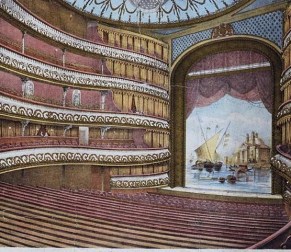
This is a quietly-spoken collection which feels as though it could have playing behind it as you read the fading sound of an audience’s laughter or the floating echo of their dying applause. With Troupers (smith|doorstop), Keith Hutson has written a lovely, reserved but confident, and also witty, pamphlet of poems which pay tribute to a world which can now be fairly said no longer to exist. The collection could itself be labelled in memoriam (as are the majority of the poems in it): the English Music Hall Tradition 1803 – 2016. The first date is the birth of Harris ‘Wonder Horse’ Fitzpatrick, “born to play the front end” of a pantomime horse, and the second the death of Tony Warren, the creator of Coronation Street (for which Hutson has written in the past) and, while not a music hall performer himself, a symbol of the working-class culture that the music hall came out of and helped shape.
Many of the poems in this collection are synopses of and brief meditations on the lives of characters (such as Sid Field and Ronnie Ronalde) who are already forgotten by all but those who, like Hutson, choose to keep them alive because of the by-gone era they represent. The poet writes, in a voice I take to be his own, at the end of the first poem, ‘Revival’, “…it’s only right/to raise another smile, to bring them back”; but if that were all the poems did they would probably run the risk of being rather weepy, treacly affairs. Actually, the strength of this collection is that it does not simply memorialise or lament, and neither does it turn hagiography; rather it uses the characters as sketched examples of human foibles, strengths, prides, and conceits. So, although the tone remains elegiac throughout, there is never a sense of easy wistful nostalgia or inverted snobbery.
The elegies are interspersed with and leavened by poems which are not dedicated to an individual but to a type, like the ‘Straight Man’ or to a caricature like Geoffrey in ‘Hostess Trolley’ or to a place – perhaps the spirit within a place – like ‘Glasgow Empire’ and ‘Civic Theatre’. These poems are often the funniest; sometimes in such an obvious way as to be reminiscent of slapstick comedy (“Essential to the town’s supply of ham” – ‘Civic Theatre’), sometimes appropriately farcical (“where he went, it went” – ‘Hostess Trolley) and sometimes much subtler (“Be subliminal lit by a bank of lights” – ‘Straight Man’). And it is worth noting that there is a more structural comedy at work throughout the collection, which comes through in line breaks, as in “A Funny Thing Happened…”: “Triumphs? Frankie Howerd Meets the Bee Gees/wasn’t one.”, and in the use of the repetitive villanelle structure of “Civic Theatre” to extend and emphasise the main joke – in these examples and others Hutson shows his great skill for comic timing.
But the comedy is more than offset by tragedy, and while the pamphlet as a whole focuses on the death of a very English culture, the individual poems themselves are often preoccupied with the actual deaths of the characters who represent that culture. Whether by suicide or natural causes, the demise of these performers is generally dealt with in abrupt, perfunctory terms: “he…blew his brains out in a Glasgow park” (‘Tiddly Om Pom Pom’), “and then she died, demented, // utterly alone – unmourned / by impresarios and sisterhoods alike” (‘Hylda’). The effect of this rather cold, almost unfeeling representation of death is to emphasise the tragedy over the actuality, in other words it fronts the poetic ‘shock’ effect and reduces the potentially soupy note of ‘loss’ that can ruin elegies. The individual deaths become less significant than the loss to English culture of the music hall tradition.
The first person is most often used to create characters, as an actor might put on a costume; but in a few poems (‘The Call of the Wild’, ‘Brass Band’, and ‘Lament’) it appears to be a genuine authorial voice that we are hearing as the poet recalls listening to Percy Edwards’s animal impressions, his love of brass band music and the theme tune to Radio Two’s ‘Sing Something Simple’. It is in these poems that Hutson gets most perilously close to becoming misty-eyed, but in a pamphlet of thirty-six poems they are a small minority and their effect on the collection as a whole is to soften the hard tone mentioned above; what remains is a thoughtful, entertaining, and sometimes moving little collection which may well send you to Google to find out more about the characters of a music hall culture which spanned the 19th and 20th centuries; but which now, in the age of the internet and 24-hour entertainment, seems long gone.
You can buy Troupers from smith|doorstop, here.

The NHS
It’s not a machine,
this great grass ball of warrens
rolling through the nation’s head.
People are machines, yes
companies, yes, departments, yes –
silvery-skinned and sleek
and flawless, virgin from the Vac Pac
then dusty with rust,
jammed and leaking battery acid,
shrinking to a stain on a bed –
but the grass ball of warrens is rolling
and unlikely, vulnerable
to this tilting terrain,
the game of maze and balance
we hold in history’s hands.
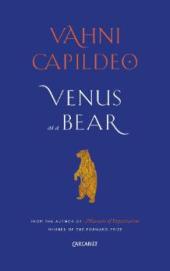
The Greek myths are never far from Vahni Capildeo’s collection Venus as a Bear (Carcanet). Although only directly mentioned once or twice, they sit behind the poems just out of sight, particularly the Ovid myths, because as the title suggests, this is a book of metamorphoses. Objects, animals, places and people become ‘other’ through language; but the ‘other’ they become is both entirely unexpected and not always easy to see.
More than in any collection I’ve read, this is one whose language is a tool for transformation, a means by which things are revealed in unhooking them from their traditional physical or metaphorical descriptions: we are shown things clearly and newly because Capildeo’s language works to bring them out of themselves. For example, we might find the complex shapes and light effects of eighteenth century cut glass in thirteen lines of Chomskyanly unlikely sentences, or the human body dissected in nine poems which border on concrete poetry and yet are not complete representations – there is a piece of a hip here, a suggested belly-button there, a clavicle perhaps?
There are certainly demands made of the reader who wants to find the clarity on offer. We should not expect meanings to be dangled in front of us for the picking; rather, and in the spirit of the book, meaning here is for the unpicking, the taking-apart, the un-piecing – and this is where the metamorphoses takes place because it is in the un-piecing of one thing that an accompanying piecing-together of another happens. We might need a dictionary or an encyclopaedia now and then, but what results is something new, and also something that was in the original all along, unseen.
The body is central to this collection, or rather bodies, because it is bodies’ proximity to one another and the flux between them that concerns Capildeo. Language is, as I say, a tool for transformation, but it is also the ‘matter’ or ‘material’ through which the flux occurs both between the bodies represented in the poems and between the poet and the reader (as is our nature: “we sentence things” says the speaker in “Moss, For Maya”, transforming an existing verb and verbing an existing noun). Throughout the collection, this exchange and interchange is reflected in part-rhymes (“impose/roses/clothes”), rhythmic echoes (“confusable with barnacles”) and almost-anagrams (“my enteared heart/my enearthed heart”). The words’ play with each other, their transfer of symbol, their passing-across of meaning and connotation creates a surreal and sometimes abstract imagery that could inspire multiple understandings, and which require not only imagination but also a willingness to engage from the reader.
Capildeo makes engagement easier for us in one way, and that is through the humour that is present throughout the collection. This is most often a low-key humour that suggests the tender bond between human and animal (“aesthetic chest-sitter”, “oink-oink-kiss”, “funny fuzzy valuable wedges”), it sometimes comes through neologisms (“petcitement”), sometimes through punning (“my gods have changed their storey”) and occasionally in anger (“A great bull is shitting on my street. Let him have quiet enjoyment”).
The poet’s journey through Iceland, Britain and the Caribbean, where these poems were written, is another aspect of the movement, transfer, migration of meaning across and though bodies: land is a physical body, countries are political bodies perhaps, and the sea is a body of water.
Readers will have their own favourite poems of course, the ones which ‘work’ best for them (and the ones they ‘work’ best for) – my own is “Seastairway”, which is an evocation of rolling, tempestuous northern seas, whose relentlessness is expressed with the constant repetition of “sea” in various existing and invented compound nouns, and whose turbulence comes through in the indenting of lines and stanzas and the positioning of lines next to one another, as though inviting two voices so that their senses overlap the way waves overlap and overlay one another. But the poem is simultaneously a portrait (though I’m not sure that’s the right word) of the poet’s emotions, caught in a relationship with which she must “put up and shut up” i.e. put up with and shut up about. The corruption of the clichéd idiom denotes perhaps a clichéd or over-common situation, but also hints at a sense of threat and/or violence from the other half of the relationship (I assume male, but I may be wrong. ‘Put up or shut up’ is a phrase I associate with John Major, which brings in a masculine and political dimension that may or may not be intended). The speaker finds safety finally in the “seaport” of herself – or perhaps a lover: “I found/me, lady, right at your side”. The wanderer has arrived on land, a new body. She has either found someone new or become something new; whichever may be the case, there is, as throughout the collection, metamorphosis. Even the source of inspiration, the Anglo-Saxon poem “The Wanderer” slips into and out of another one, “The Seafarer”, while the chosen epigraph, “ofer waþema gebind”, can be translated (according to the online versions I found) in at least two different ways: “over the frozen waves” or “over the binding of the waves”. Is the speaker frozen, or bound? Or both, as they are related, but with very different connotations? The poem’s meaning is not fixed but what is to be found here will greatly reward the reader who spends time with it.
The book is bursting with ideas, every line bringing something new to puzzle, excite, amuse and delight. Even the titles themselves often look like mini-poems (“They (May Forget (Their Names (If Let Out)))”, “Leaves/Feuillles/Falls”). And this brings me back to the title of the collection, which is as multi-layered as everything else in the book, Venus as a Bear being inspired by both a visit to the Old Royal Naval College at Greenwich and, it seems, the song “Venus as a Boy” by Bjork. “He believes in a beauty” sang Bjork about her aphrodisiacal/Keatsian muse: “For they believed in duty” echoes the speaker here, about the mysteriously fanatical and well-spoken “cabin boys”. And as I look at the title, I find the final two letters of the two nouns are an anagram of URSA…so the language, as ever, is moulding and melding with the subject. Am I getting carried away, or is Capildeo, already in the title, “sentencing” Venus and Bjork’s Boy to ‘Beariness’ and all that goes with it? And I cannot resist finishing with one further question (because they keep on coming!): is Capildeo’s Venus a hairy goddess or a bald bear? This is not flippant. We know the speaker of at least one of the poems states amusingly “I choose to sing to the hairless”, which to me makes it seem unlikely that the feminine hairlessness of Venus would be transmogrified into beary-hairiness. So, what do we make of a bear divested of its fur? And where does The Velvet Underground’s “Venus in Furs” come into it, if at all? I’ll leave that one with you. Suffice to say that this is poetry to make you re-examine the way you read poetry, and there is little in poetry more exciting than that.
 Wood Bee Poet