You will either recognise those lines, or you will not. Or perhaps you half recognise them and could make a reasonable guess as to where they come from. Do you like them? Do they say anything to you beyond their immediate sense? If you recognise them, are you reappraising them now, or falling back on an opinion of them that you see no reason to alter? Do you know who wrote them? And does that knowledge have any bearing on how you feel about them? Are you sure?
The lines are the first stanza of a poem that my wife asked the celebrant to read out at her mother’s funeral shortly after Christmas. It was important to her that the lines were not prefaced with either a title or the name of the poet, and when I asked her why she said that she didn’t want any external information about the poem to distract from the lines themselves; she wanted our friends and family to be able to relate them directly to her mother without encouraging the associations, not to say potentially the prejudice and bias, that come with contextualising labels. This seemed to me quite a profound understanding of what the reader of a piece of literature brings to that work.
The lines are in fact from ‘Bilbo’s Walking Song’ by JRR Tolkien, and they are appropriate to my mother-in-law in ways that only those who knew and loved her could know. Their authorship, their provenance you might say, was at best clutter, at worst misleading in the context where they were spoken in memory of Dorothy.
Here, then, is an example of anonymity as a Good Thing.
We are very used to anonymity as a Bad Thing: online trolls hiding behind their faceless social media accounts; masked riot police beating up an innocent civilian; Ku Klux Klanners marching in torchlight; balaclava-wearing terrorists posing with a terrified civilian. Anonymity in all these cases is a masking of identity, allowing excesses of depravity and cruelty to take place unhindered. If identity is taken away, all humanity goes with it.
Anonymity has always been a way of avoiding punishment or retribution: the masked highwayman, the masked rioter. But it has also been a means of escaping persecution – think of the criminal who comes out of prison and moves to a different part of the country to avoid the stigma his prison sentence has brought within his community – to make a fresh start – a form of anonymity, blending, faceless, into a new crowd. And it has been a form of protection: as in the anonymity guaranteed to the witness identifying a criminal from a line-up.
But what of that thing which could be, although I’m not sure it is, called ‘nymity’, the condition of not being anonymous? Outside of the example of my mother-in-law’s funeral, what is wrong with attaching names to poems? On the face of it, it is innocent and practical enough: if you know the name of the poet, you know who to praise or who to condemn, depending on whether you like or dislike the poem. You know whose work to look for online or in a bookshop, and whose to avoid. Perhaps more importantly, you know who to hold to account if the poem contains language you find offensive, or if it makes you feel uncomfortable, or fearful.
And for the poets themselves, there is the personal kudos from receiving praise and prizes – even if there may also be humiliation in the opposite. This is the gamble the artist makes.
We live in a liberal democracy, which prizes individuals and our freedoms above all things: the freedom to choose, the freedom to own. And a less touted but natural concomitant of these central freedoms, one which has come to sit above them all in our current wealthy, capitalist context, is the freedom to have all our desires sated. We must have satisfaction, constant and complete (why else was Mick Jagger so pissed off?)
And what satisfaction is there for a poet if their poem is published without name or context? Some partial satisfaction in having known you wrote it, a quiet sense of accomplishment perhaps, but not the full-on, 21st century level of satisfaction we’ve come to expect.
Context is important, it’s true. I recently responded to Hôtel Amour by Deryn Rees-Jones, and a reading of that work without knowing the context of Rees-Jones’s experience of her husband’s death, is very different to one which has that knowledge. It is less rich, the work’s meanings less apparent.
But still, I think there is a case to be made against nymity. And the case comes in two distinct arguments.
The first is as follows: yes, we live in a liberal democracy, but one in which those central tenets of liberal individualism (those concerning the rights of the individual) have become so magnified and distorted that they are out of all proportion with other important aspects of a well-functioning society. For example, the duties of an individual, the flipside of their rights, are all but forgotten in much liberal discourse, often because they are seen as a more conservative ideological component.
Is there, then, room to be made for a cultural space where the individual, their identity, and all their baggage, are left to one side? Might this be part of a movement that begins to redress the balance of this (actually quite precious, for all its faults) liberal democracy? I think there is, although what it would look like I’m not sure. I imagine an online platform where a weekly anonymous poem is shared, and anonymous commenters are welcome to leave their thoughts. A community of poets and readers who know nothing about one another. There may be some rudeness if the poem met with disapproval, but how long would such rudeness last if the nymity of the poem was denied? Where is the fun in trolling if you don’t know who it is you’re trolling? And might, at last, some form of trust ensue?
The second argument comes from a feeling I have that many (perhaps all) of us tend to base our judgements of poems as much on the identity of the poet and what other people have already said about a poem, as we do on the objective ‘thereness’ of the words on the page. This is part of the function of the blurbs on book covers; they’re partly there to sell the book, obviously, but also, I feel, to tell people what to think: oh, X says this is great; then it will be okay for me to think it’s great too. And this focus on context and nymity also leads (I suspect, although I’m not sure I could prove it) to a slightly cowardly tendency of some online reviewers to wait until a collection has been well reviewed by a couple of other critics, so they know whether they are safe to like or dislike it.
As I say, context is important; but there is also a sense in which critics’ views are both formed and then validated by the identity of the poet. A new poem from a much-admired, multiple TS Eliot Prize winner sits in a different spot in a reader’s brain from one by an unknown – or known and disliked – poet. And can we really say we read a poem we know to be written by a man in the same way as one we know to be written by a woman? Likewise race and sexual preference.
There is a fair rebuttal of this argument, which is: of course we read these works differently, and so we should. There is language that is appropriate for some groups and not for others. In fact, you can probably go further and say we need to know as much as we can discover about a poet’s cultural identity so that we have the information we need in order to form an appropriate opinion of their work.
But this argument only goes so far.
The need expressed in the previous paragraph is only a need if your approach to poetry is extractive and judgemental: one in which you ask yourself, ‘What can I take from this work, and what opinion can I form about it?’. But there is another approach, and one I prefer, which where the reader asks: ‘What can I give of myself to this work, and what can I learn from it?’
If I take the second approach, my own identity and context are key, because I cannot escape them. Outside that… there are words; and there is what occurs when those words meet my own particular outlook on the world. This is my reading; and I must ask myself, what happens to my outlook on the world, now I have encountered these words? What aspects of my Self must I open up, and scrutinise, and change? This process could be seen as a gift I receive from the poem and my encounter with it. I am not so much extracting from the words, but in opening myself up to them, they respond by giving themselves to me.
Again, (for the third time) I will emphasise: context and identity are important, and I am not arguing for the above to be the only approach. The relationship between reader and text that I describe does not preclude the context of the poem or the identity of the poet, in fact those things can increase the possibilities of what the reader can learn. But they are not necessary, and if they are missing, other aspects of learning may be allowed to emerge.
Imagine a sonnet appearing in a magazine. Simply that. No name, no title, no explanation. It is just there in the middle of a blank page. I am being asked to consider far more than I would be if poetic identity and context were provided. I have to think about what the poem might mean if it were written by all sorts of different kinds of people. My opinion may now need to be conditional. I will have to live with an element of doubt. In short, I may need to relinquish some control and accept that my understanding of the work can only ever be provisional and contingent.
In our age of constant demands for individual empowerment and control over everything and everyone around us, and the resultant pandemic of unjustified certainty around us, perhaps some small pools of doubt here and there might be things worth having.
Finally, and by way of a coda to this blogpost, my imaged sonnet appearing anonymously in a magazine does assume that the poem, though free from context and nymity, is written by someone. I’ve written about the clear threat posed by AI to poetry elsewhere; but here again is an example where, whether we like it or not, we are going to have to inject a much-needed element of trust into the cultural conversation. If an editor includes a poem in a magazine now, any poem and any magazine, we only have their word that it is what it claims to be and not created using AI. Just as the editor only has the word of the individual who claims to be the poet. I think accepting space for some anonymous poems in contemporary magazines would help build trust by increasing doubt.
And I’ll end on a suitably dramatic note by saying something I truly believe: in poetry there should always be doubt, as non-fixity and multiplicity of meaning is part of what makes it poetry; and where there is doubt there must also be trust. If there is not to be trust in poetry, poetry as an art form will be dead.
Postmodernists who bewail Generative AI should ask themselves why
Back in 2018, I wrote a response to a piece in The Poetry Review by Jack Underwood called ‘On Poetry and Uncertain Subjects’. Underwood had written about the uncertainty of poetic knowledge, and how a poem existed only as the various meanings given to it by its readers. I reflected that however true that readerly instability may be, there must be some stable element always remaining in that text, something of the author who wrote it, I called it the text’s ‘linguistic DNA’. Underwood responded to my response, saying that the author is not stable and that in language the subject is always in a process of ‘becoming’. Linguistic DNA did not, he told me, exist; in fact, the writer themself was nothing more than a text which required constant reinterpretation.
I came away, as so often, with a feeling that in order to take a certain view of what a poem is you must take a certain view of what a person is. If you disagree with someone on the latter, you are unlikely to agree on the former. On reflection, I think I agreed with Underwood that we constantly reinterpret ourselves and others, and to that extent we are impossible to pin down – the inherent uncertainty of the Self is a big part of why we cleave so determinedly to political frameworks and moral certainties. They provide us with an illusion of stability where none exists. We are all memory and projection, making ourselves up over and over. Why should poems be any different?
This was all very well, and as I say there is a lot to admire and agree with in Underwood’s essay, but it left me uncomfortable and for long time I wondered where that discomfort was coming from. Then ChatGPT came along, and suddenly everything seemed to come into focus.
In my abovementioned blog, I brought up the subject of Roland Barthes’ Death of the Author as it relates to these ideas of instability and the locus of meaning-making in texts. For Barthes, the author was nothing, the reader everything; and Underwood’s analysis seems to make the same claim – any point of stability that we might designate ‘The Author’ simply disappears in a puff of smoke, replaced by a multiplicity of shifting and subjective interpretations. A thrillingly postmodern view of what it means to know a text.
But now, here comes generative AI with its Large Language Models that can generate texts of increasing complexity and nuance, literally without the need for an author. And it seems to me that we finally have on the near horizon the possibility of the actual death of the author – a death which when it comes down to it, Barthes was only fantasising about. Now we can really have stories and poems whose meaning really lies only with the reader. Barthesians should celebrate, should they not? Or if they are not, they should at least ask themselves why they are not pleased that we can finally bid farewell to that outmoded and unfashionable concept of ‘authorial intent’.
The truth is, and I don’t think I need to point out the wider cultural relevance of this, theoretical musings on what something is or isn’t make for wonderful philosophy, but they don’t seem so much fun when that thing is actually faced with imminent destruction. Suddenly all the old, simpler, more unfashionably obvious definitions seem important again.
My instincts, as a borderline postmodernist, are that I don’t want AI to replace human authorship, I don’t want engineers to generate quickly adjustable prompts to run algorithms that will generate novels, short stories and poems in seconds (although it is arguable that there is a certain artistry in this), and I don’t want the texts that I hold dear as expressions of humanity to be reduced to reader-only ‘objects’. But why, if I have sympathy for many of the central tenets of postmodernism, should I care?
There’s a coherent argument that generative AI texts are expressions of humanity, because LLMs use neural networks to machine-learn from disparate examples of human expression to produce outputs in the same way that an individual human processes a lifetime of experiences to produce outputs.
But something doesn’t feel right, does it? Machine-learning human expressions is not the same as processing human experiences. And what generative AI texts are missing is nothing to do with their subtlety, nuance, complexity, beauty – all of which may be attributes a reader applies to them perfectly legitimately whether machine or human generated – but it is everything to do with intentionality.
You don’t need to go as far as Nick Cave’s comically overblown comments on “notions of creative struggle” and “fast-tracking the commodification of the human spirit” to agree with his basic point that there is a disconnect between a text created by generative AI and anything that we would feel comfortable calling a piece of art. What is lacking is not necessarily the tortured sweat of a struggling bohemian but the simple human intention to produce.
This isn’t just the intention to produce a complete artefact either, a prompt engineer or the person who presses the ‘print’ button on a computer has that level of intentionality; a piece of art, for it to deserve the name, requires a process of intentionality – a series, or a web, of interlinked and concomitant choices that have been made and which result in a single cultural artefact which is then available for multiple and shifting interpretations. This is the work of an artist, or in literary texts, an author.
But the postmodernist might complain, we have slipped here from ‘text’ to ‘art’; which is like slipping from black to white, or from subjective to objective. Quoting Nick Cave’s bombast takes us in the wrong direction, they might say, it distorts the situation by giving the Ego flesh and blood, giving a living human identity to exactly that signifier from which those attributes are stripped by the act of writing, “…that neutral, composite, oblique space where our subject slips away, the negative where all identity is lost, starting with the very identity of the body writing.” as Barthes put it. And what he did in killing off the author was nothing less than shedding symbolically the Modern in favour of the Postmodern, where there is no fixed ‘truth’ and so there is no fixed ‘artist’ or ‘author’, they themselves are texts, cultural objects with a multiplicity of readers who each carry with them their own version of the truth.
I mentioned above that I have sympathy with this view. And it perhaps goes without saying that the author can only die if they have previously lived. Barthes not only kills off the previously assumed notion of the author being the sole dispenser of a text’s meaning, but he also makes the assumption that any given text must, literally speaking, have a writer, i.e. a ‘subject-who-writes-it’, who only then symbolically dies, having written the text (or more accurately whose very act of writing the text causes them to pass from subject to object). Generative AI represents a future Barthes could not have realistically anticipated, one in which texts do not have authors, and so they cannot die. It is a future in which the premise of his essay, that texts have authors which can be denied their authority, is itself denied.
So, my inner postmodernist reprimands me, there is no reason a Barthesian should not lament the effect of generative AI on literary authorship – to suggest as much confuses the Death of the Author with the Annihilation of the Creative Process, which Barthes was never interested in doing.
But this still leaves a question: if the act of writing causes the authorial subject to become an object, why would we mourn the loss of that subject in the first place? What is wrong, since meaning’s construction is solely in the hands of the reader, with considering a poem in the same way as we might consider a stone used as a paperweight? It is what it is, in its context, uncreated, but selected from others and used to fulfil a purpose. We can ascribe meaning to such objects, read their context, their surroundings, the criteria for their selection. Why should we worry that there was not an actual ‘creator’?
Well, because there is a difference between a stone and a poem. However beautiful, intricate etc the stone may be, however astounding the millions of years it took to fashion it, there was no intention behind the process of creation; whereas the poem had a poet. And the poet had an idea.
The intention to realise an idea, the will to do one-thing-and-not-another in intimately linked succession, projecting forward with some kind of, albeit abstract, hope for an end product, this remains with the text after it is written, and we are justified in analysing authorial intent, as long as the reader makes the assumption, as Barthes did, that the text has an author. If we do not make that assumption, then what I called the text’s linguistic DNA is snuffed out, but at that point we no longer have a text, we have a stone-like object.
So now my inner classical pragmatist speaks up and claims that the postmodernist who mourns the real death of the author at the hands of generative AI does not believe their own doctrine. They want with their reason to rid the text of authorial intent but with their instinct they desire to retain the warmth of human intentionality at a texts core.
Which brings me back round to my earlier comment that in order to take a certain view of what a poem is you must take a certain view of what a person is. Postmodernism does not account for people as homo duplex, as Durkheim had it, that simultaneously singular and multiple creature that we are – both an individual and part of a group, always. Postmodernism turns us into a multiplicity of meanings and denies that we are also a singularity. It has no room for that paradox in its explanations.
So my current position is this: yes, we are all memory and projection, yes, our identities are multiple, shifting, and historically/culturally formed, and yes, poems are the same. But I maintain that there is a single us-ness to us as well (a ‘more-than-the-sum-of-all-our-parts’), just as there is a single strand of linguistic DNA in a poem which runs directly from the intentions of the author to the perceptions of the reader. In coming to that conclusion, it is for me the Postmodernist who dies, not the Author.
Let’s be clear, there are many other reasons for poets to be concerned about the rise of generative AI. Will editors ever again be able to read their vast inboxes each week and be sure that what they are reading was written by a person? Will the judges of poetry competitions now always live in fear that their choice poem will turn out to be AI-generated and they will be shamed in front of the whole poetry community? Can poets be sure that their competitors for space in poetry magazines are not using AI to generate poems that are better than their own in a fraction of the time? Whereas images, and pieces of music and film will all in time have ways developed to prove their provenance, literary texts, particularly poems – that uniquely rememberable cultural commodity – will never have such assurances provided.
My contention is that the postmodernist should not care about any of this because the act of writing kills off the author anyway; my suspicion is that many will.
I’m reposting two essays posted some time ago on The Friday Poem. The first is this one from 2022 on Spender and Ideology which I still think is worth reading; and it will be followed in a second post by my 2023 essay on Fran Lock ‘One Woman Revolution‘. I acknowledge and thank Hilary and Andy from The Friday Poem for the lovely job of editing they did on both these pieces.
Two Poetries: Spender, Poetry and Ideology
1 Poetry and revolution
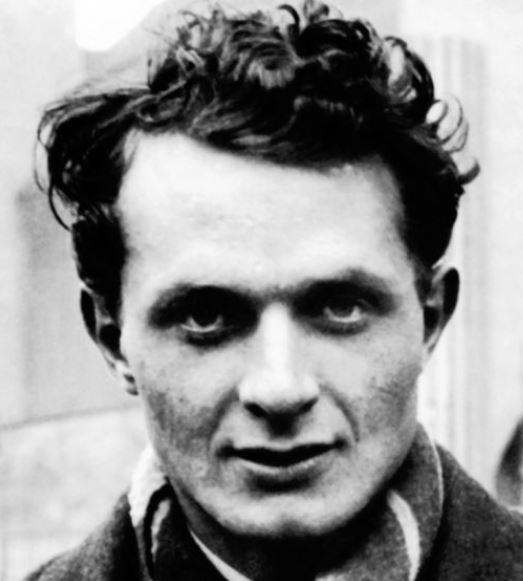
What I like about Stephen Spender is that I disagree with him as much as I agree with him, sometimes in quick succession. In both poetry and prose, he seems to alternate between making a good point and then missing the point entirely, seeing clearly and then muddying the waters. But this makes him more interesting rather than less so because it makes him more human – it makes him, to use Auden’s phrase about Yeats, “silly, like us”. His movement from liberal to liberal-in-communist-clothing and back again in the thirties and his evolving (or revolving) views on art and the interface between art and politics leave us with the impression of a man deeply committed to his fellow Man. But at the same time his intense urge towards autobiography and self-examination can appear egotistical, almost self-obsessed at times. More to the point, Spender’s life and work, taken as a whole, leave the student of them with a sense of disorientation which speaks loudly to the various uncertainties of our present time.
There are reasons to agree with his view in the quote above, from the 1933 essay Poetry and Revolution. But as we experience the seismic shifts in communication that the internet has brought and is bringing about, it is worth pausing to consider what role can be played by an art form whose medium – the shared word – is the very one bending and buckling under the strain of internet-enabled shifts in ideology as they play out in endless streams of ‘content’.
In Poetry and Revolution, Spender goes on to admit that the poet is “often a potential revolutionary” but one who “is able to escape from the urgent problems of social reconstruction into a world of his (sic) own making. This world”, he says, “is a world of the imagination only bounded by the limits of the imagination”. For Spender this goes to the heart of what a poem is: “… the writing of a poem solves the poem’s problem. Separate poems are separate and complete and ideal worlds. If a poem is not complete in itself and if its content spills over into our world of confused emotions, then it is a bad poem, and however much it may impress people at present, soon it will be forgotten and will cease to be a poem at all”.
On Spender’s reading, then, poetry is an activity that stands in the way of social change rather than playing a role in facilitating it, one which diverts the attention of “potential revolutionaries” away from doing anything that will actually make a difference and mires them in their own hermetically-sealed “world of imagination”. It is still a view which would chime, I imagine, with many who are not drawn to poetry and who see poets as self-important introspectionists. And it is certainly true that often even the poetry of dissatisfaction ends up being “sublimated into art which can only be enjoyed by a cultivated and endowed minority” rather than a proletarian rallying cry. This is not snobbery – the cultivated and endowed these days come from both the middle and working classes – but it is the nature of poetry that it is to the taste of only relatively few, who write for each other to a large extent. There is an argument then not so much that a “poem solves the poem’s problem” as “poets solve poets’ problems”.
And it is perhaps a short step from here to charging social-justice-minded poets with virtue signalling. If poets are only talking to each other, are they not just egotistically displaying their virtuousness in the same way they display their publication history and competition wins in their Twitter bios? Although it would probably be idle to argue that this kind of empty gesturing does not happen in the contemporary poetry scene, it is overly-cynical. For one thing it implies a lack of sincerity, but also the tag ‘virtue signalling’, often held up in criticism of Millenials by older generations, is just a loaded name for a neutral feature of human group-bonding behaviour, which social media amplifies. If a poet wants to signal to the rest of their in-group that they wish to establish and strengthen a bond with it, is this so different from signalling to a publisher that you wish to establish and strengthen a bond with them and get published by writing and submitting the ‘right’ kind of poetry? The reward for most poets in both cases is not financial gain but in-group kudos, which is to say ‘belonging’. This impulse is neither surprising nor unusual but it is, if anything, the opposite of revolutionary.
But ultimately Spender’s argument does not stand up. Poems aren’t “separate and complete and ideal worlds”. Whatever else they are, poems are language; and language is not just a system of the mind but an activity between minds – it is communicative, and its meanings only exist in the context of negotiations and relations between minds. The idea that a poem, any more than a person, can be an island entire of itself is, I think, mistaken. No poet is capable of being without other people, and no poem is capable of being without other poems – those read by the poet and those read by the readers of the poem. A poem, in fact, only exists at all as the node of countless other literary, social and psychological acts.
2 Poetry and the internet
Spender was writing almost ninety years ago as a young communist (of sorts) in a Europe where fascism was on the rise. Though much has changed since those pre-Spanish Civil War days, much has clearly also stayed the same or returned in different forms. But the recent rise in authoritarian thinking cannot be separated from the birth and rise of the internet, which is the context in which it is taking place. It’s not unusual to hear the first thirty years of the internet described as a communication revolution on a par with that following the invention of the printing press; this is particularly true in relation to social media, which has turned inward-facing private language outward into the public domain and created a whole new communicative context in which social movements can flourish. For the first time in history we can see ideological shifts happening in real time and in microcosm; we can see, hear, read and feel the tension and conflict this creates as language’s meanings shift beneath the feet of language users. Meaning depends on agreement, and when there is no consensus about what we mean by race, racism, male, female, fascism, science, history, freedom, etc. then language users’ ability to discuss these subjects disappears. The echo chambers we hear so much about are metaphorical spaces for people who agree on certain definitions of words; those who define them differently are in different spaces. Social media provides us with easy access to these spaces and tweet-sized windows through which to shout at each other. And so we are divided – at least, our divisions are consolidated and calcified.
In some ways language use on social media is the diametric opposite of poetry, it’s hasty, often thoughtless, knee-jerk and, for want of a better word, artless; but on the other hand exactly because it is all these things, it’s a reflection of the real inner-lives of real people. And entering, or expressing, the reality of inner-life is very much the domain of poetry. Poets have always turned inward-facing language outward, that is the essence of what they do. They should be on home turf with the shifts in meaning, inherent complexities, and dangers of language communicated via global social media. They should relish, embrace, play with, analyse and problemitise the changes in usage, and the new (or not-so-new) layers of meaning, of key ideological words. Shouldn’t they? In this way they could shine new light on the changes in understanding that are taking place as the communication revolution carries us into uncharted and dangerous territory, as the world shifts and the internet context we all live in develops and matures.
Spender’s essay was poorly received by his fellow communists in the UK and it contributed to a cooling of his relationship with the movement, which would finally be brought to an end by his experiences during the Spanish Civil War. As Louis MacNeice said, “he (Spender) had not been born for dogma”[1].
Groupthink and echo chambers, those breeding grounds for dogmatic thinking, are not new things, they are old things in a new context. And dogmas, or ‘certainties’ which in the political sense are unambiguous articulations of ideologies, have always been receptive to ideas that concur with them and hostile to ideas that repudiate them. Revolutionaries by their very nature must be dogmatic; after all, doubt, ambiguity, and equivocation will never bring down a corrupt system. But the poet, Spender seems to be concluding in Poetry and Revolution, is compelled to stand apart from dogma. If this is so, and such a conclusion needs exploring, it is not because their poems are isolated from the rest of the world as he thought, but because, unlike most prose, they have the potential to allow poets and readers of poetry to see past the rhetoric and signalling of the prevailing ideology.
3 Poetry and ideology
The problem with thinking about ideology is deciding what the word means in the first place. Terry Eagleton proposed sixteen different definitions[2] and others have suggested more. The frustratingly paradoxical fact is that which definition you accept largely depends on which ideology you adhere to or lean towards in the first place. That I find much to agree with in Marxist academic Eagleton’s book but feel most convinced by liberal academic Michael Freeden’s ideas about ideological morphology marks me out immediately as the left-leaning liberal that I cannot deny being. Marxists, and I suspect full-blown fascists, would be likely to reject or downplay his thesis.
For the sake of clarity, then, when I talk about ideology in this essay, I do not take it to be incorrect or ‘false’ thinking, nor do I presume that to call a work of literature ideological is to speak insultingly (not necessarily anyway). Instead, I am thinking about groupings of political concepts that mutate in populations over time, and which have porous borders, overlapping and bleeding into each other. I am also thinking in terms of (to use Freeden’s term) the decontestation of concepts, which is to say, the characteristic of ideologies to strip away any doubt around a political concept’s definition (to insist, for example, openly or by implication, that ‘racism’ or ‘freedom’ or ‘woman’ means x or y, and that any other definitions are invalid). While I don’t agree that everything is ideological, I do think a lot of what we see and hear around us is, and that for an individual’s sense of self, once a particular set of conceptual definitions has taken hold – especially when supported and enforced by peer groups – they are unlikely to be replaced by other definitions; although as a group they are likely to morph over time. But when socio-economic conditions are such that ideologies do shift, sometimes suddenly, it can be disorienting and upsetting for the individual[3].
I believe that poetry can speak to its own ideology very clearly, passionately, illuminatingly. And in doing so it can work to mobilise the Dominated against the Dominating. Korean Translator-poet Don Mee Choi’s recent DMZ Colony is a powerful example of how poetry can disrupt hegemonic discourse to reclaim, or create space for, a language for voices within the ‘neo-colonialism’ of the US which might otherwise be suppressed or lost (see my review of the work of Don Mee Choi here). Rebecca Tamás in Witch does something similar, in a very different way, with a particularly empowering expression of socialist-feminist thought (see Imogen Shaw’s review of Witch, here). The same argument could be made for Danez Smith’s Don’t Call Us Dead (see a review of Danez Smith’s Don’t Call Us Dead by Christopher Spaide here), or indeed for any in the illustrious line of protest poetry going back as far as, and probably further than, Shelley’s ‘The Masque of Anarchy’ (which was memorably put to work by Jeremy Corbyn, British politics’ most recent revolutionary spirit, who knew a galvanising ideological call-to-arms when he heard one).
All of these works speak to and for the poet’s ideology against one more powerful and dominant. In Freeden’s terms they are ideological transmitters[4]. And they suggest that Spender is wrong in so far as writing poetry can be a revolutionary activity to the extent that it can contribute to revolutionary thought, as a clarifier, a motivator, and perhaps more importantly as a focal point around which thought can gather. However, the poetry of protest exists on a scale: at one end the quick-hit, strong-rhythmed adrenalin rush of the anthem, slogan and rock song (Feed The World, Make Poverty History etc.) – Shelley’s slumbering lions are probably towards this end of the scale – and at the opposite end the complexity, subtlety and depth of thought in poets like Choi, who specifically builds her language around thinkers such as Walter Benjamin and Louis Althusser. In one sense, of course, it feels wrong to suggest there is a scale at all because of the clear argument that hollow sloganeering of the Feed The World variety is far more a cohering feature of the dominant rather than any subjugated ideology. But there is an equally clear argument that choice excerpts from thumpingly powerful poems like ‘The Masque of Anarchy’ are stronger ideological transmitters than the other poems I’ve mentioned above exactly because of their sloganeering quality. I justify the suggestion of such a scale simply in as much as the poetry on it speaks to the ideology of its intended audience as opposed to across different ideologies.
But is it possible to speak across ideologies at all, quite apart from the question of whether you would want to? Some would say that only a liberal would entertain the thought and so the enterprise could never claim any ideological standpoint other than a liberal one[5]. Freeden uses the metaphor of a room to illustrate his conception of ideologies, which seems particularly apt when relating them to poems, with their Italian stanzas. He suggests that core concepts are rearranged within ideologies over time, the way furniture may be moved about in a room becoming more or less central or peripheral depending on historical circumstance. The question, then, and perhaps it does touch on a hopelessly middle-of-the-road, middle-class and middle-aged project, is whether it is possible in a poetic room to peek through a hatch and see what it looks like in the next door room, and even speak to its inhabitant. To put it another way, does poetry have the capacity to help us understand someone else’s world view?
4 The poet and the human paradox
Almost ten years after Poetry and Revolution, writing as a fireman during the Second World War, in Life and the Poet (1942), Spender concedes that “the best living poets … all share in common the fact that they are in revolt against the standards of contemporary industrial civilisation” and that “(i)n this, though not always in a political sense, (they) are revolutionary”[6]. He is suggesting here that the political revolutionary and the poetic revolutionary are quite separate beings; and he is right in as much as writing a poem does not have the same potential to change society that running into Parliament with an army behind you does; but again, the Spender of Life and the Poet seems to be misunderstanding not only the nature of a poem but by extension the nature of language and as a result, people. The political and the non-political, just like the external and internal, the individual and the social, are surely less separable than he appears to think.
He goes on to write of the poet as an astronaut landing on the moon and finding ways to describe this alien landscape to the people back on Earth; he uses this analogy to express how he sees the poet’s role as one whose duty it is to “invoke familiarity” in readers and thereby to provide them with the experience of strangeness. For him, poets see what others cannot, and their job is to reveal these unseen aspects of reality in relatable language. This is an attractively deceptive view of the relationship between the poet and the reader because it is profoundly individualistic (which was at Spender’s core and the reason he made such a bad communist).
As we have seen, Spender considered both the poet and the poem to be entirely separate from the rest of society – so separate as to be comparable to a voyager on the moon – but in doing so he misses the reader’s role in meaning-building and indeed the rest of society’s role in forming whatever ‘strangeness’ the poet is able to see and how they are able to see it. His separation and elevation of the poet and the poem to a position above the masses of ‘non-poet’ readers helps explain his ultimately liberal final conviction of the failure of communism / socialism. And it also highlights his failure to identify the great paradox that in our own time social media, and the so-called identity politics it magnifies, has laid bare: the paradox that humans are at the same time both individuals and inseparable on a material level from the rest of society (language and thought being a full part of the material world). Facebook, Twitter, TikTok – they all bring us face to face with this paradox every day in the form of the externalising of internal language mentioned above. And, again, it wouldn’t seem unreasonable to suggest that poets are in a good position to engage with this positively, perhaps channelling John Keats and his negative capability.
But poets and poems are certainly not exempt from the paradox and it cannot be resolved without considering that the poem is a literary form which tolerates experimentation of expression at the micro as well as the macro level of language. It can play with tensions in morphology, syntax, grammar, imagery, rhythm etc., and for this reason it has the capacity to de-normalise the fabric of discourse. It can, in effect, break apart the decontested language of ideology and, I would suggest, ‘recontest’ it. It can do this by unhooking language from one ideological or historical context and hooking it into another, or by juxtaposing language from opposing ideologies, or by breaking lines or even words to emphasise or subvert their ideological function, or through many other means.
5 Two poetries
There are two ways that this capacity of poetry may be marshalled. One way is to put it to the service of an ideology separate to the dominant one (perhaps one new and revolutionary), for example by breaking apart the language of Empire and colonialism to critique it and suggest new, ‘decolonised’ understandings. Choi does this when, for example, she pulls apart and reworks her own translation of an interview with a communist sympathiser and Korean political prisoner in DMZ Colony; Smith does it in a particular poem from Don’t Call Us Dead which unpicks in very few words, from an erotic encounter, questions about the American Civil War and slavery as well as European colonialism; and Tamás does it for feminism by subverting the Hughesian ‘Crow’ voice and pinning it alongside the language of medieval witchcraft to critique patriarchy. These are poems in which the poets challenge orthodoxy by transmitting ideological notions that stand counter to the prevailing ones. Receptive, sympathetic, and – let’s not fool ourselves – educated readers will likely respond by adding them to the catalogue of texts which support their already preferred ideology. But will these texts actually persuade an unreceptive and ideologically opposed reader to change their viewpoint, or will such readers just be irritated by them? The former is possible, the latter more likely I would guess. This is what I call poetry speaking to its own ideology, and I’ve already made the claim that it could be seen as contributing to revolutionary thought, if not truly revolutionary in itself.
But another way to marshal poetry is for a different kind of exploit, one in which the poet is not looking to argue but to observe, not looking to prove anything but to find something out. This is a poetry that plays and experiments with language in order that first the writing of it and then the reading of it is a form of learning, of finding out something previously unknown. To say that this is poetry without an agenda would be naïve, but it might at least be poetry which does not know what its agenda is until the poem is complete. Although this may not be an approach that fits comfortably with the certainties of our times, it is not a new one either, and I will call on two very different poets to provide it, at least from the writing side, with a sense of legitimacy. Firstly, M. NourbeSe Philip, herself quoting Thomas More, in her massive incantatory work Zong!, who wrote “The poet is the detective and the detective a poet”[7]. And secondly, Wallace Stevens, whose comment, “sometimes (the subject of a poem) becomes a little more fluid, and the thing goes ahead rapidly” was glossed by Michael Hamburger as “it is the poem that tells the poet what he (sic) thinks, not vice versa“[8]. But as we have seen, the meaning-value of a poem neither ends with the poet nor begins with the reader.
In elevating the poet too high at the expense of the reader, Spender missed both the contribution poetry can make to revolutionary concepts and its full value to the individual. The poem’s nature provides it with a potential for not only challenging but genuinely investigating meanings, allowing for a break-up and re-assembly of language impossible in other art forms, giving the poet and receptive reader access to new understandings of, for example, groupthink, echo chambers, and ever-changing identity signifiers. My contention here, to be clear, is that the poem is a more powerful tool than Spender gave it credit for.
And in failing to take the poem seriously enough, we may ourselves fail to see that there are these two separate but equally necessary strands of poetics. One strand contributes to inevitable and desireable ongoing revolts in the form of critical voices from sidelined and oppressed communities, and this strand should rightly be given priority in publishing terms as the socioeconomics of the industry recalibrate to reflect wider society. The other strand works to comprehend and orient as these changes take place, and it must come from both minority and majority voices. In short, all of this is to differentiate between a poetry which ‘knows’ and poetry which ‘doesn’t know but wants to find out’.
6 Conclusion: poetry and trust
Poetry which ‘doesn’t know but wants to find out’ might usefully be guided by principles similar to the drivers of morphological ideology suggested by Michael Freeden: that is, to aim for “(r)econstruction, deconstruction, and interpretation, elucidation and exploration, and the accumulation of knowledge, rather than the substantive prescription of ethical positions and solutions”[9]. This will never, and should never, replace the poetry of critical, ethically-certain voices, but it may prove to be equally valuable. After all, while an abuser should face criticism and punishment, the best first step to preventing them from abusing again is to understand them.
Any poetry which is looking for answers rather than providing them, however, has two significant hurdles to get over: one is the skill of the poet, and the other is the skill of the reader. With neither party able to escape ideology, both must approach poetry, from their different angles, as a fertile arena for experimentation and discovery – research – from which what emerges may not always be compatible with either of their beliefs, but which may help both of them understand more fully the vortex spinning around them. Poets must feel free to work with language they find difficult and in some cases repellent, but equally if they do this they must do so skilfully enough to learn from the ideology (be it fascist, racist, misogynist, or homophobic etc) by learning about it rather than contributing to it. Readers must allow that the language which confronts them in poetry is working in a space rich with potential to unpick the fabric of ideologies, and sometimes suppress their initial emotional reactions in favour of dispassionate, interested study. In short, writers and readers of poetry need to put their trust in one another, and in turn they must not abuse the trust put in them.
References
1 – I’m quoting Spender here, himself quoting MacNeice, in ‘Background to the Thirties’ (p.20) in The Thirties and After: Poetry, Politics, People, 1930s-1970s (Vintage, 1979), in which the essay Poetry and Revolution is also available
2 – Ideology: An Introduction Terry Eagleton (ABS, 2007), p 1-2. Eagleton’s book is the best introduction I know of to the various ways of conceptualising ideology, and the challenges of doing so; although it does not include reference to Freeden’s theory, even in the 2007 revised edition
3 – For anyone interested in the morphology of ideology, Freeden’s (very) short, Ideology: a very short introduction (OUP, 2003) is clear and simply put. Also Chapter 7 of The Oxford Handbook of Political Ideologies (OUP, 2013). For a longer, more complete understanding of Freeden’s ideas, try his Ideologies and Political Theory (OUP, 1996).
4 – Ideology: a very short introduction, p.69
5 – Liberalism of course contains multitudes. Of all ideologies it is the one which wants to be all things to all people, and for that reason if no other, it is a very bloated and unsatisfactory world view (I say this despite considering myself a liberal). It contains much of what many people (including conservatives) would call conservativism, and, equally, much that is attractive to those who would prefer to describe themselves as socialists or progressives. It is also tainted by association with the madnesses and villainy of twentieth-century capitalism, and in some cases (not without reason) held to blame for them. Liberalism’s particular amorphousness is probably the key to its success, but at the same time it is what leaves it open to disorienting phenomena such as those at the heart of the present identitarian ‘culture wars’, in which individuals search out ever-more specific categories for themselves within an ideology that survives and evolves by placing ostensible freedom of the individual at its centre.
6 – Life and the Poet, (Searchlight, 1942), p.66
7 – Zong! (WUP, 20060, M. NourbeSe Philip, p.78
8 – The Truth of Poetry (Anvil, 1996), Michael Hamburger p.37 9 – The Oxford Handbook of Political Ideologies (OUP, 2013) Eds. Michael Freeden, Lyman Tower Sargent and Marc Stears, p.117



 Wood Bee Poet